Modernizing Nigeria’s Power Grid—The air in Nigeria crackles with more than just heat; it’s the constant, frustrating tension of energy insecurity. For too long, the national power grid has been a symbol of fragility, its frequent collapses acting as a brake on a nation bursting with potential. Electricity, the very lifeblood of modern civilization, has become an existential challenge. Without a unified, resilient, and modernized grid, Nigeria risks nothing less than the erosion of its industrial base, the weakening of its global competitiveness, and a deepening cycle of poverty. This is not just an economic constraint; it is a direct threat to national stability and sovereignty.
The cycle of energy insecurity is a thief in the night, stealing productivity, fueling unemployment, and chipping away at public confidence. The cost is staggering. Nigerian manufacturers alone lose an estimated US$27 billion every single year due to the grid’s unreliability. Across the entire economy, inadequate power supply accounts for a crushing 5–7% of GDP, equating to approximately US$25 billion annually. The commercial weaknesses run just as deep: as of August 2024, nearly 55% of customers were unmetered, and revenue recovery barely scraped above 73%. The grid has become the weakest link, a systemic vulnerability that holds the entire country back.
In advanced economies, from the Baltic states to Western Europe, the national grid is treated as a non-negotiable asset. These countries understand that stable, high-voltage transmission provides the resilience and redundancy needed to prevent local faults from becoming nationwide catastrophes. Nations like Estonia, Latvia, and Slovenia similar in scale to many Nigerian states have leveraged reliable power to build high-tech, high-GDP economies. Their experience shouts one universal truth, no nation industrializes without a stable grid.
Recognizing the gravity of this situation, the Federal Government, in partnership with Siemens Energy and the German Government, launched the Presidential Power Initiative (PPI). This is not another fleeting policy; it is the first end-to-end, sector-wide modernization program in nearly two decades, finally harmonizing decades of fragmented reforms into one coherent roadmap.
The PPI steps into the vacuum left by the 2013 privatization, which failed to attract the necessary investment because of high technical losses and commercial risks. It brings the necessary weight: government-backed certainty, technical credibility through Siemens Energy, and an investment-ready architecture.
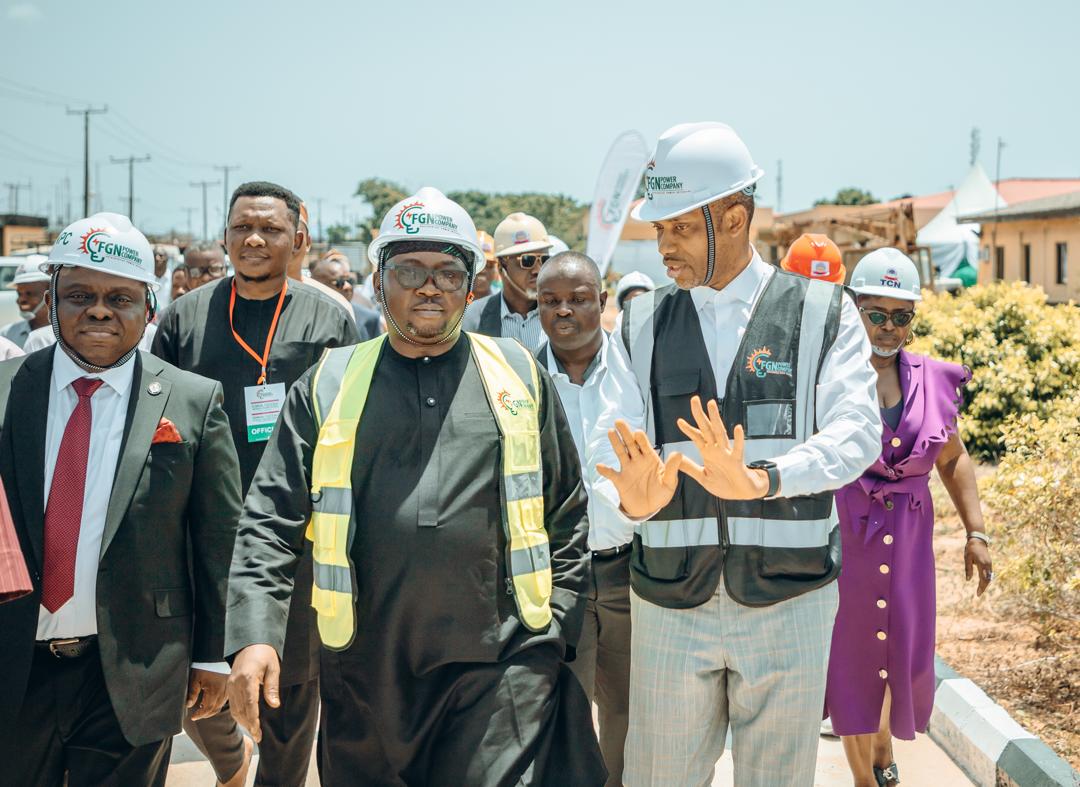
The FGN Power Company, acting as the government’s special purpose vehicle, is leading the charge. The initial pilot projects have already delivered 1,080MW of additional operational capacity, installing new high-capacity transformers and mobile substations, leading to immediate improvements in load flow and stability.
Now, Phase 1 (Batch 1) is underway, with engineering, procurement, construction, and financing in progress to deliver another 895MW through the upgrade and expansion of priority substations nationwide. Looking ahead, a further 2,500MW is planned for future expansion, contingent on securing the necessary project financing.
The PPI is a systemic restructuring, tackling the historic mismatch between power generation, transmission, and distribution. It is deploying modern transformers, automated control systems, and digital grid tools designed to achieve three crucial outcomes: higher delivery of generated power, measurable efficiency gains, and revenue assurance to ensure sustainable financing. In short, the PPI is building the first truly modern, unified, and resilient Nigerian grid, the very backbone of national economic survival.
About FGN Power Company:
FGN Power Company (FGNPC) is a Special Purpose Vehicle (SPV) mandated to implement the Presidential Power Initiative (PPI). FGNPC’s mission is to address infrastructural gaps by investing in end-to-end solutions that will deliver reliable, incremental energy to customers in Nigeria.
Media Enquires:
Magdalene Abang
Communications Manager